

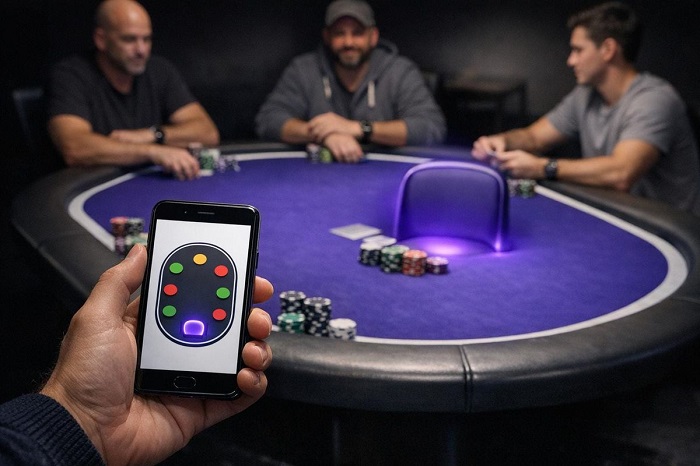
Popular culture loves to depict poker as an uncompromising clash of towering intellects—two stone-faced titans staring each other down under low-hanging lamps, trading five-bet bluffs in an unyielding battle of psychological warfare. While high-level tournament streams often reinforce this romantic image, the day-to-day reality of cash games and regular cardroom play is fundamentally different. In practice, long-term success and personal enjoyment at the felt rarely hinge on outplaying world-class masters. Instead, they depend on an overlooked, unglamorous discipline: table selection.
Where you choose to sit dictates virtually every parameter of your session. It determines your hourly win rate, the degree of emotional volatility you experience, the pace of play, and whether a five-hour session feels like an invigorating social evening or an exhausting grind. Treating game selection as an afterthought is one of the most expensive mistakes a poker player can make.
Skill in Poker Is Always Relative
In traditional sports or classical games like chess, measuring ability is straightforward. If a grandmaster plays a novice, the grandmaster will win nearly every single contest. In poker, however, your edge does not exist in an absolute vacuum. Your profitability is strictly a mathematical byproduct of the skill gap between you and the other participants sharing the felt.
If you are the tenth-best poker player in the entire world, but you sit down at an eight-handed table featuring the nine players ranked above you, you are the mark. Over time, that table will strip your bankroll clean. Conversely, a fundamentally basic, uncreative player who simply understands starting-hand discipline and straightforward value betting can generate an enviable win rate simply by finding games filled with wild, undisciplined opponents who routinely call bets with bottom pairs and weak draws.
Many players spend dozens of hours every week studying complex game theory optimal (GTO) solver outputs, refining defensive check-raising ranges and balancing river betting frequencies down to the tenth of a percent. While strategic study is undeniably valuable, deploying advanced defensive mechanics against a table full of passive recreational players is unnecessary overkill. Finding a table where opponents make fundamental, glaring structural errors will do far more for your bottom line than memorizing intricate solver matrices.
Recognizing Profitable Table Dynamics
Spotting a lucrative table does not require sophisticated tracking tools; it requires paying attention to the rhythm and physical energy of the room before you ever commit a single chip.
A profitable table almost always exhibits high liquidity and active participation. In brick-and-mortar cardrooms, look for games featuring frequent multiway pots, where three, four, or five players consistently pay to see a flop. When players limp into pots rather than raising, or when the average pot size swells relative to the table stakes, money is moving freely. These behaviors indicate that players are prioritizing entertainment, curiosity, and action over strict mathematical defense.
Conversely, a table populated entirely by silent players staring ahead through polarized sunglasses, wearing noise-canceling headphones, and meticulously timing their actions is typically a game to avoid. When a game features constant preflop folding, small pots settled before the river, and aggressive three-betting from every position, you are essentially trading money back and forth with other disciplined players while the cardroom steadily drains the table via the rake.
The Impact on Mental Fatigue and Enjoyment
Beyond raw financial returns, table texture radically impacts your psychological well-being. Poker is a game of prolonged card-dead stretches. Enduring two hours of unplayable starting cards at a dead, robotic table where nobody speaks is mentally draining. That environment breeds boredom, and boredom is the primary catalyst for undisciplined play, prompting players to splash around in pots they should easily fold.
When you sit at a lively table where players are conversing, laughing, and ordering food or drinks, those inevitable cold streaks become easy to tolerate. The game retains its core identity as engaging recreational entertainment. You stay relaxed, your focus remains intact, and your cognitive stamina lasts significantly longer into the session.
Seat Selection: The Micro-Game Within the Table
Finding the right table is only half the battle; where you sit relative to specific personalities is equally critical. In poker, position is the ultimate operational leverage. Acting last on every postflop betting round gives you more information than your opponents, allowing you to control pot sizes, extract maximum value, and execute low-risk bluffs.
When evaluating a table, prioritize direct position over the most aggressive, erratic players. Having a loose, unpredictable gambler seated directly on your right is the ideal scenario. When they bet or raise, you have the immediate freedom to isolate them, call with speculative holdings, or step out of the way before the rest of the table acts.
Placing that same aggressive player directly on your left, however, turns the session into an uphill slog. Every time you enter a pot, they will raise or call behind you, forcing you to play out of position for the rest of the hand. If you find yourself pinned between tight, unyielding regulars on your right and aggressive three-bettors on your left, asking the floor manager for an immediate seat change is not an admission of weakness—it is essential tactical maintenance.
Navigating the Split: Live Cardrooms vs. Digital Lobbies
Executing effective table selection differs significantly depending on whether you play in a physical casino or on a digital platform.
In live cardrooms, observation begins the moment you enter the room. Take a walk past the tables running your preferred stakes. Listen to the room. Spot the tables with deep, uneven chip stacks and audible banter. When putting your name on the board, feel free to specify which active game you prefer. If the table you land on proves to be a dry, tight stalemate after an hour, approach the floor podium and request a table change. Most venues accommodate these transfers seamlessly.
Online platforms require a more data-centric approach. Lobby metrics often display valuable operational numbers, including the percentage of players seeing the flop, average pot sizes, and hands dealt per hour. Look for stakes with higher-than-average flop percentages, which signal loose preflop tendencies. In modern online ecosystems where anonymous tables or quick-fold pools dominate, table selection shifts toward identifying the best times of day to play, such as weekend evenings and regional holidays when recreational volume peaks.
Dismantling the Ego Trap
The single greatest barrier preventing players from practicing ruthless table selection is personal ego. Many individuals view poker as a test of raw machismo. They deliberately seek out the toughest, most aggressive players in the room, driven by a stubborn desire to prove their strategic superiority.
This mindset conflates poker with gladiatorial combat. Poker is fundamentally a commercial enterprise of allocating risk and harvesting inefficiencies. There are no bonus points awarded for beating a world-class player on a complex river bluff; a stack of hundred-dollar chips won from a frustrated regular spends exactly the same as a stack won from a novice misreading their hand.
Leaving an unproductive or overly difficult game is a mark of professional discipline. When you view your time at the table through the lens of longevity and capital preservation, table selection ceases to be an optional habit. It becomes the foundational skill that protects your bankroll, sharpens your focus, and ensures that poker remains a consistently rewarding pursuit.
