

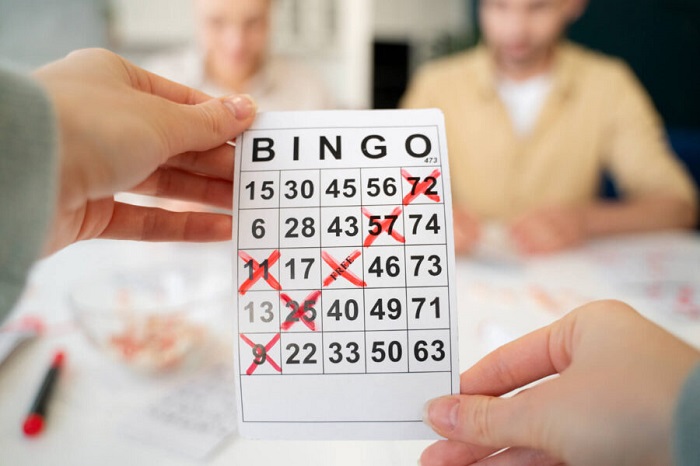
Walk into a bustling bingo hall or log into an online room on a Friday night, and the atmosphere feels electric. Daubers hover over paper cards, chat boxes scroll at lightning speed, and numbers fire off every few seconds. To a newcomer, the entire spectacle looks like pure, unfiltered luck. A ball drops, a number is called, and someone claims the prize.
While nobody can predict which numbered ball will roll out of the hopper next, treating bingo as nothing more than a blind roll of the dice is where most novices go wrong.
Experienced players know that long-term enjoyment and sustainable play come down to a structured approach. You cannot influence the draw, but you have absolute control over your preparation, card volume, financial boundaries, and mental focus. Building disciplined habits from your very first session protects your wallet, sharpens your attention, and transforms an overwhelming game into a deliberate, engaging pastime.
The Reality of Bingo Strategy: Controlling the Controllable
Before looking at specific tactics, beginners need to understand what strategy actually means in a game of chance. Unlike poker or blackjack, bingo offers no opportunities to bluff, double down, or alter the mathematical payout of a specific card once the round begins. Every number has an equal probability of being drawn.
True strategy in bingo is operational rather than predictive. It centers on maximizing your mathematical probability relative to the field, eliminating unforced mistakes, and managing your resources. Players who rely on superstition or buy dozens of cards without a plan often burn through their budget in minutes. Players who establish consistent routines early on give themselves the best possible chance to win while keeping the experience enjoyable.
Establish Strict Bankroll Boundaries Before Buying In
The single most critical habit any beginner can develop is strict financial management. It sounds unglamorous compared to hunting jackpots, but without a firm bankroll framework, no other strategy matters.
The Dedicated Session Budget
Never treat your bingo funds as an open tab. Decide on a fixed dollar amount for your session before you enter the hall or deposit into an online account. This money should be purely discretionary, treated as the cost of an evening of entertainment. If your budget is fifty dollars and the games run through it faster than expected, your session is over. Walking away when your predetermined limit is reached builds the emotional resilience needed to avoid chasing losses, which is the fastest route to frustration.
Card Cost Versus Payout Proportions
Beginners often gravitate toward the cheapest cards available, assuming that lower costs automatically equal safer play. Conversely, others jump straight into high-stakes games hoping for massive windfalls. A better habit is to evaluate the ratio between card price, the size of the prize pool, and the number of players involved. Spending a modest amount on a game with a sensible prize pool and fewer competitors consistently yields a higher expected value than buying a single card in a massive, multi-thousand-player tournament.
The Card Volume Trap: Quality Over Quantity
When beginners see seasoned regulars managing fifteen or twenty cards at once with effortless speed, they often assume they should do the same. This is one of the most common early missteps.
In live paper bingo, buying more cards than you can comfortably scan within a three-to-four-second call interval leads to missed numbers, frantic searching, and unnecessary stress. Missing a single number invalidates the mathematical advantage of holding that extra card.
Start your journey with two to four cards per game. This range allows you to maintain full visual control over your grid, spot patterns comfortably, and learn the rhythmic cadence of the caller. As your visual tracking improves and number recognition becomes automatic, you can gradually introduce additional cards.
If you play online where auto-daub features mark your cards automatically, the danger shifts from manual error to financial overextension. It is tempting to buy the maximum allowed card limit with a single click. Resist that impulse. Purchasing thirty cards per round will drain a modest bankroll before you have settled into the rhythm of the session. Keep your card counts conservative until you have a realistic feel for how long your bankroll lasts across different game types.
Time Your Sessions to Improve Your Odds
One of the few genuine mathematical levers a bingo player can pull involves game timing. In games where the prize is fixed rather than determined by ticket sales, your odds of winning depend heavily on the total number of cards in play across the entire room.
If you enter a room with one hundred players who each bought four cards, you are competing against four hundred total cards. If you play that same game during an off-peak hour when only twenty players are present with four cards each, the competition drops to eighty cards. Your individual card now represents a significantly larger share of the total pool, which directly improves your mathematical chance of taking the prize.
Make a habit of exploring off-peak playing hours. Mid-morning sessions, weekday afternoons, or late-night games tend to attract far lighter traffic than weekend evenings. While progressive jackpots that grow based on attendance are an exception to this rule, standard fixed-prize games are statistically friendlier when the room is quiet.
Familiarize Yourself With Statistical Frameworks
Over the decades, mathematicians and probability analysts have studied bingo patterns to identify structural approaches to card selection. While these theories cannot override the random nature of the draw, they provide useful frameworks for thinking about balance.
Granville’s Balance Approach
Joseph Granville, a well-known financial analyst, developed a popular theory based on the law of averages. He argued that in a standard 75-ball game, an infinite series of random draws will eventually produce a balanced distribution. Therefore, when choosing paper cards from a physical tray or picking your cards online, you should look for grids that display:
-
An equal balance of odd and even numbers.
-
A relatively even split between high numbers (38 to 75) and low numbers (1 to 37).
-
A uniform distribution of final digits (for instance, cards containing numbers ending in 1, 2, 3, 4, through 9, rather than multiple numbers ending in the same digit).
Granville reasoned that a card with balanced diversity across these categories has a statistically broader coverage as random numbers are drawn.
Tippett’s Median Theory
British statistician L.H.C. Tippett proposed an alternative concept based on sample sizes. In a 75-ball game, the median number is 38. Tippett suggested that the longer a game lasts, the more likely the called numbers are to cluster around that median value. Conversely, shorter games tend to favor numbers closer to the extremes (near 1 and 75).
If you are playing a standard straight-line bingo game, which usually resolves quickly within a few calls, Tippett’s theory suggests selecting cards featuring numbers skewed toward the lower and higher ends of the board. If you are playing a complex coverall or blackout game that requires dozens of calls to finish, prioritizing cards concentrated around the median number (the late 30s and 40s) makes theoretical sense.
Use these frameworks as helpful guidelines for engaging with the mechanics of the game, but never mistake them for guarantees. The cornerstone of your strategy must always remain discipline, patience, and bankroll control.
Understand the Specific Rules of Each Variant
Bingo is not a monolithic game. The rules, speed, and winning conditions shift significantly across different styles, and jumping between them without adjusting your play is a recipe for quick losses.
-
75-Ball Bingo: The classic North American format played on a 5×5 grid with a free center space. Games can require simple horizontal, vertical, or diagonal lines, or specific geometric patterns like diamonds, letters, or picture frames. Always verify the required pattern before the first ball drops.
-
90-Ball Bingo: The dominant format in the UK and Australia, played on a 3×9 grid where each row contains five numbers and four blank spaces. These games typically feature three distinct winning stages in a single round: one line, two lines, and full house.
-
80-Ball Bingo: A faster-paced shutter-board style game utilizing a 4×4 grid, popular in digital spaces. Patterns vary widely, from four corners to full vertical lines.
Before committing funds to a new variant, spend several rounds observing without playing, or play with minimal stakes. Learning the layout and tempo without financial pressure prevents costly misunderstandings.
Cultivate Focus and Mental Endurance
Bingo demands sustained visual attention and quick cognitive processing. When mental fatigue sets in, the likelihood of overlooking a number or misreading a pattern rises sharply.
Treat your sessions like any other activity that requires alertness. Play in an environment with minimal external distractions. If you are in a physical hall, arrive early to organize your daubers, tape your cards down securely, and settle in without feeling rushed. If you are playing online, avoid multitasking across multiple browser tabs or household chores while a live game is running.
Limit your sessions to reasonable time blocks. Playing for two focused hours is far more rewarding than grinding through five hours of continuous play while your eyes strain and your attention drifts. When your energy dips, close your cards and take a break.
Building better bingo habits from the start turns the game into a balanced, engaging pursuit. By taking control of your spending, keeping your card volume manageable, hunting for favorable player ratios, and maintaining sharp focus, you remove the chaos from the experience. While the numbers that tumble from the cage will always remain a matter of chance, how you play the game is entirely up to you.
