

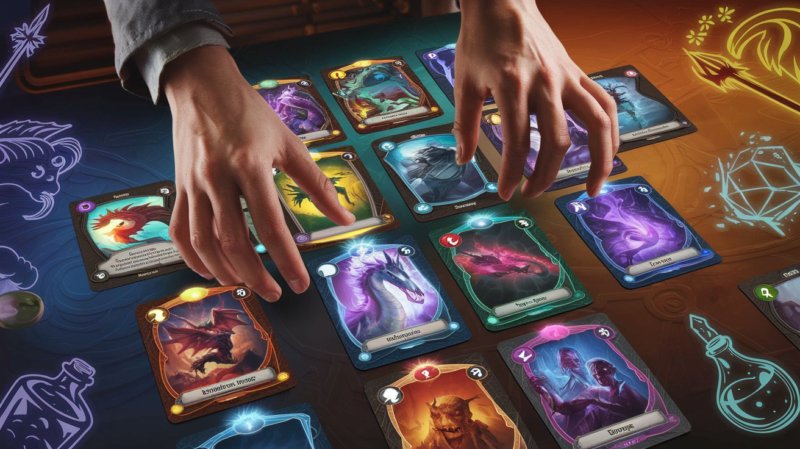
Pick any game that has survived hundreds of game nights on a kitchen table or racked up thousands of digital matches on a screen, and you will rarely find that gorgeous illustrations or evocative lore are doing the heavy lifting alone. Aesthetics invite people to sit down, but mechanics are what compel them to shuffle up for one more round. At its core, a deck of cards is an exercise in managing constrained possibilities under the pressure of incomplete information. When game systems turn those constraints into genuine psychological dilemmas, the game transcends novelty and becomes an enduring obsession.
Modern game designers have pushed far beyond the traditional routines of drawing a single card, playing it, and passing the turn. By introducing innovative mechanical twists that test risk assessment, spatial reasoning, and deduction, they create vibrant decision spaces that never play out the same way twice.
The Agony and Elegance of Multi-Use Cards
Few design elements elevate a card game as effectively as forcing a single card to fulfill multiple competing roles. In traditional systems, a card is either a creature, a spell, or a resource. You pay a fee, place the card on the table, and execute its printed text.
Multi-use mechanics shatter that rigid boundary. A single card might function as a devastating attack, a permanent passive engine piece, or the exact currency required to purchase a completely different card from your hand. When you hold five cards, you are not simply looking at five options; you are navigating dozens of branching paths.
The Friction of Opportunity Cost
The psychological magic of this mechanic lies in meaningful opportunity cost. When a player discards an exceptional late-game spell simply to pay the entry fee for an early-game utility card, it stings. Every single play requires a willing sacrifice. This design instantly eliminates dead draws because every piece in your hand retains baseline utility, yet it elevates skill expression by rewarding players who can accurately gauge short-term survival against long-term ambition.
In-Game Deck Construction and Engine Cultivation
For decades, customized card play was defined by the collectible format: spend hours outside the game selecting sixty specific cards, refine the balance, and bring your finished creation to the table. Deckbuilding games flipped that concept inside out by making the act of building the deck the actual game itself.
Players begin with an identical, deliberately weak set of basic cards. As turns progress, they purchase stronger cards from a central pool, gradually shaping their collection into an efficient machine. The thrill here is not merely winning; it is the tactile joy of watching an engine assemble in real time before your eyes.
The real brilliance of the mechanic, however, hides in the discipline of deck thinning. Experienced players quickly realize that adding powerful cards is only half the battle. Purging the weak starter cards through trashing mechanics concentrates the power of the draw pile. Watching a bloated, erratic twenty-card mess transform into a lean, finely tuned loop that fires off seamless synergies produces an intellectual satisfaction few other genres can match.
Evolving the Classic Trick-Taking Formula
Trick-taking is one of the oldest mechanical families in tabletop gaming, tracing its lineage through centuries of Spades, Hearts, and Bridge. Because the basic grammar of the genre—following suit, trump cards, and winning hands—is deeply ingrained in the gaming consciousness, modern designers have used that familiarity as a launchpad for radical subversion.
Rather than competing to sweep the board, modern trick-takers often introduce cooperative constraints, hidden missions, or inverted objectives. In some systems, players must coordinate to ensure specific players win designated tricks without ever speaking about the cards in their hands. In others, taking the highest card carries severe penalties, forcing participants to navigate the round by purposefully underplaying or deliberately giving away control.
These structural twists force players to pay excruciating attention to what everyone else is doing. You are no longer just counting cards in a vacuum; you are interpreting the subtle narrative behind why an opponent hesitated, why a partner discarded an off-suit ace, or how a single low-value card can disrupt an entire strategy.
Simultaneous Action and the Death of Downtime
Nothing drains momentum faster than waiting five minutes while an opponent paralyzes themselves over a turn. When players spend three-quarters of a match staring at their phones waiting for their turn to come around, engagement plummets.
Simultaneous resolution solves this problem by demanding that everyone act at the exact same moment. Whether through drafting mechanics—where players select a single card from a hand and pass the rest around the table—or blind commitment systems where participants lock in their cards face-down before a simultaneous reveal, the game moves at a relentless pace.
This mechanic introduces an intense layer of double-think mind games. Because your card resolves alongside your opponent’s, you cannot simply play the optimal mathematical answer to what is currently visible on the board. You have to anticipate what card they believe you are going to play, factor in their likely counter, and decide whether to stick to your primary plan or pivot to a defensive bluff. The tension during the countdown to reveal is electric, and the outcome feels earned because neither player had the luxury of hindsight.
Push-Your-Luck and Dynamic Risk Curves
Greed is a powerful game mechanic. Push-your-luck card systems prey directly on human optimism, offering players continuous opportunities to draw additional cards for exponentially higher rewards, balanced against the looming threat of losing everything gained during that round.
What keeps these systems from feeling like mindless coin flips is transparency of information. When a player can see the cards already discarded and understand the shrinking safe margins of the remaining deck, drawing another card stops being a blind gamble and becomes a calculated bet.
The emotional swings produced by these moments are unmatched. Successfully pulling the exact card needed to seal a round triggers genuine euphoria, while busting on an unnecessary draw provides an instant, funny lesson in hubris. It forces players out of safe, algorithmic patterns and demands that they read the emotional temperature of the table and their own appetite for risk.
Card games endure not because of complex components, but because of the elegance with which they structure human interaction. A simple deck of numbered cards can generate suspense, trade-offs, analytical joy, and social banter—provided the underlying mechanics give players meaningful agency. When a game respects player choices and consistently serves up agonizing, rewarding dilemmas, it earns a permanent place at the table.
